

Swaying
Learning to Live in Two Places

One afternoon during the second pandemic lockdown in 2021, I sat on my sofa, watching the gum trees sway in the winds of a ferocious Ngoonungi storm. I was reminded of my unintended presence here in this land. Those trees were not my trees. I came here for love and have found much more to love and understand about this place I now call home.
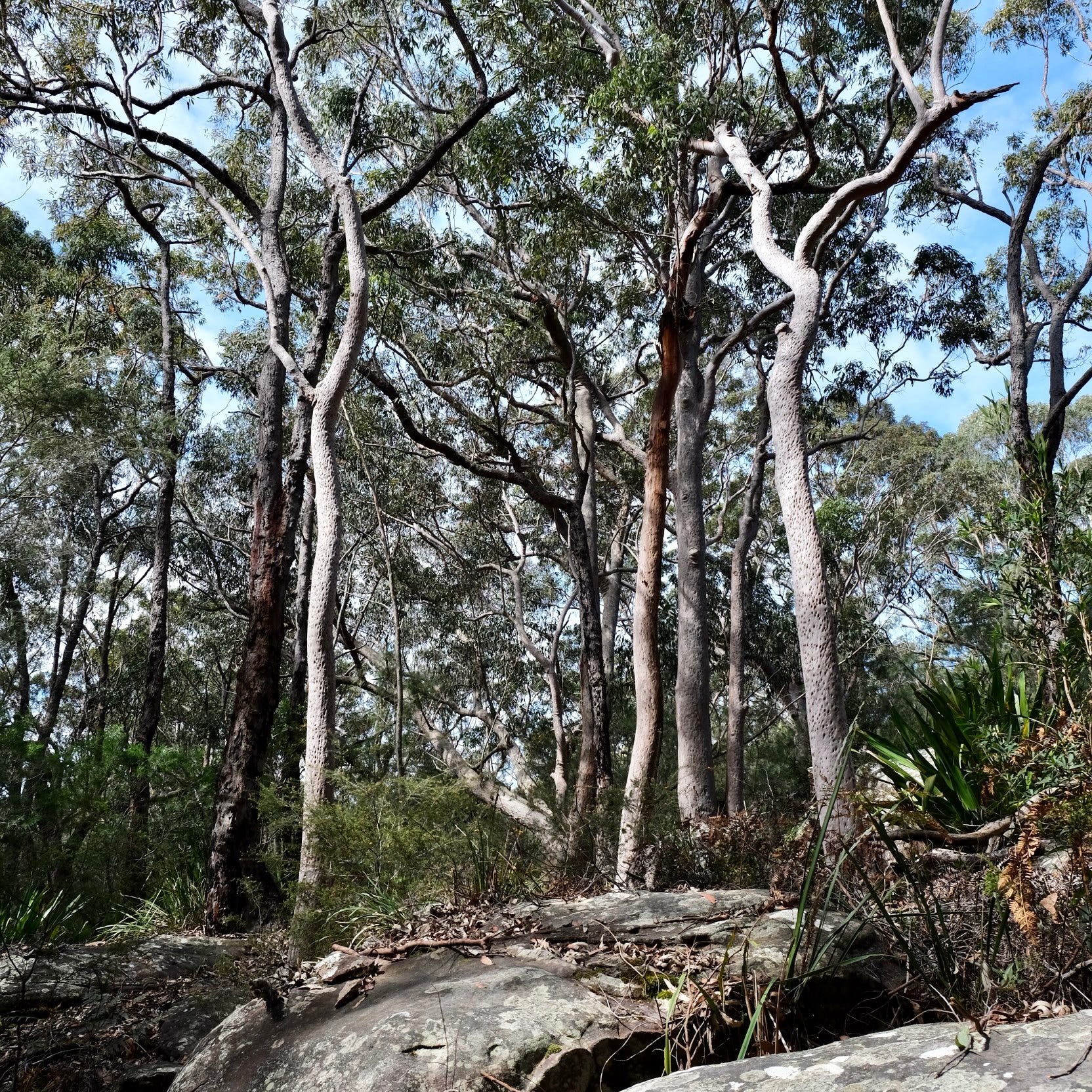
Before the storm arrived I’d spent time talking with my neighbour Richard about the various species of native trees on the nature strip he began planting shortly after arriving in this rainforest town over forty years ago. He said there is nowhere else he’d rather be. We are lucky to be here, we agreed. He grew up further up the coast past Sydney, then lived in the city and eventually came here to live in the bush by the sea. I'd done the same only but I came a little further, originally.
Richard’s father was English, he tells me and so he listens to the BBC world service when he can’t sleep late at night. I think about the podcasts with familiar accents I listen to when I can’t sleep. I think about all the people now, here by chance or by design, generations in situ or new arrivals missing home, watching unfamiliar trees sway in the stormy winds. I wonder if they miss their language, and I wish I could remember more of mine. Crann - Irish for tree. I remember that. Ag luascadh - swaying. I had to rely on google for that one.
There’s a constant storm within me as I adapt and learn about the landscape and culture here and feel the distance from my other home. I feel the roots of those windswept gums taking hold, populating like a microbiome within, purple coral peas wrap their tendrils around me and wattle blooms fill my nose. I happily plunge into these wild coastal waters, salty drips displacing sand as they drop from my skin, sitting atop the sand dunes scanning the horizon for humpbacks. I listen to the birds, and my heart fills when I hear the unmistakable cries of the black cockatoos flying overhead. This place, Dhawaral country, endlessly delights me. But some other trees still sway inside, the oak and hawthorn don’t rest easy and my bones long to lie on another rocky shore far from here.
Within this maelstrom, I wrestle with what it means to be Irish in Australia. I’ve lived here for over eleven years and I have come to know fragments of this complex country, ecologically, socially and politically. Irish history here is fraught, many convicts were sent here at the start of the colony, and many of them were poor children and teenagers banished from home for petty crimes like stealing bread. There were others, of course, some hardened criminals. As colonised people, our language and culture were stolen in Ireland, and here in Australia. Nevertheless, some of those early convicts and immigrants went on to steal...people, land, language and culture. Colonised became colonisers. As Irish president Micheal D Higgins rightly said in his 2017 speech in Perth "If we are to be truly unblinking in our gaze, we must acknowledge that while most Irish emigrants experienced some measure, often a large measure, of prejudice and injustice, there were some among the number who inflicted injustice too”. Sometimes the oppressed become the oppressors and that truth is not often uttered when people look back on the Irish emigrant story here and abroad.
Connecting to nature here can bring a feeling of great sadness for the loss of culture and connection to country that Aboriginal people have experienced on this colonised continent. Yesterday I bathed in a tiny rockpool, away from the crowds, after the sun went down on a 35-degree day. I lay in the water just deep enough to submerge my body and head and still be supported by the sand below. I wondered who might have been here in this pool before when there were no houses on the headland, and no people in their beach chairs, tending to their fishing rods, surfing and emptying their eskies. What would this place have looked like more than 250 years ago?
There is a language of the land, the words that describe rocks, and sounds of water and rivers, the changes of the tides, the moods of the skies, and the stories that tell us why and how the land was formed. Oral traditions, like Gaeilge (Irish) and the more than 360 aboriginal languages across Australia play an important role in the care-taking of the land, by knowing its seasonal changes, naming and knowing the plants and animals. But, like the creatures and natural phenomena these words describe, the languages are also going extinct. As my roots deepen here with each passing year I am reminded to step lightly. I'm reminded of the great void of my knowledge and the growing unfamiliarity with my own land and the absence of my ‘teanga dhúchais’, my mother tongue.
Like many people living away from home, the nostalgia and longing for home continue to grow the longer I'm away. Maybe the time away from those I love or the lilt of my late grandmother's voice and her stories that I now struggle to hear in my mind, the colour of the Irish sea under grey skies or the view of the Poolbeg towers across Dublin Bay. Perhaps it is nostalgia but a kind of grief. Time changes the once ideal portrait we paint of a place. When we look back, the details change, leaving a feeling of false recollection. You can’t leave and expect to return to a place unchanged, there is grief in knowing what you have left behind and the imagined place that never really existed except in muddled memory.
Despite climate change, drought, fires and floods, the land, with its own turnings, changes and metamorphoses doesn’t bare grudges or hold us accountable. We aren’t judged for the intrusion and damage we have caused. Now, more than ever it seems, people seek refuge in the wild. I know I do. This country is wild, in every sense. In all my senses awakened, unrelentingly by its constant conversation.
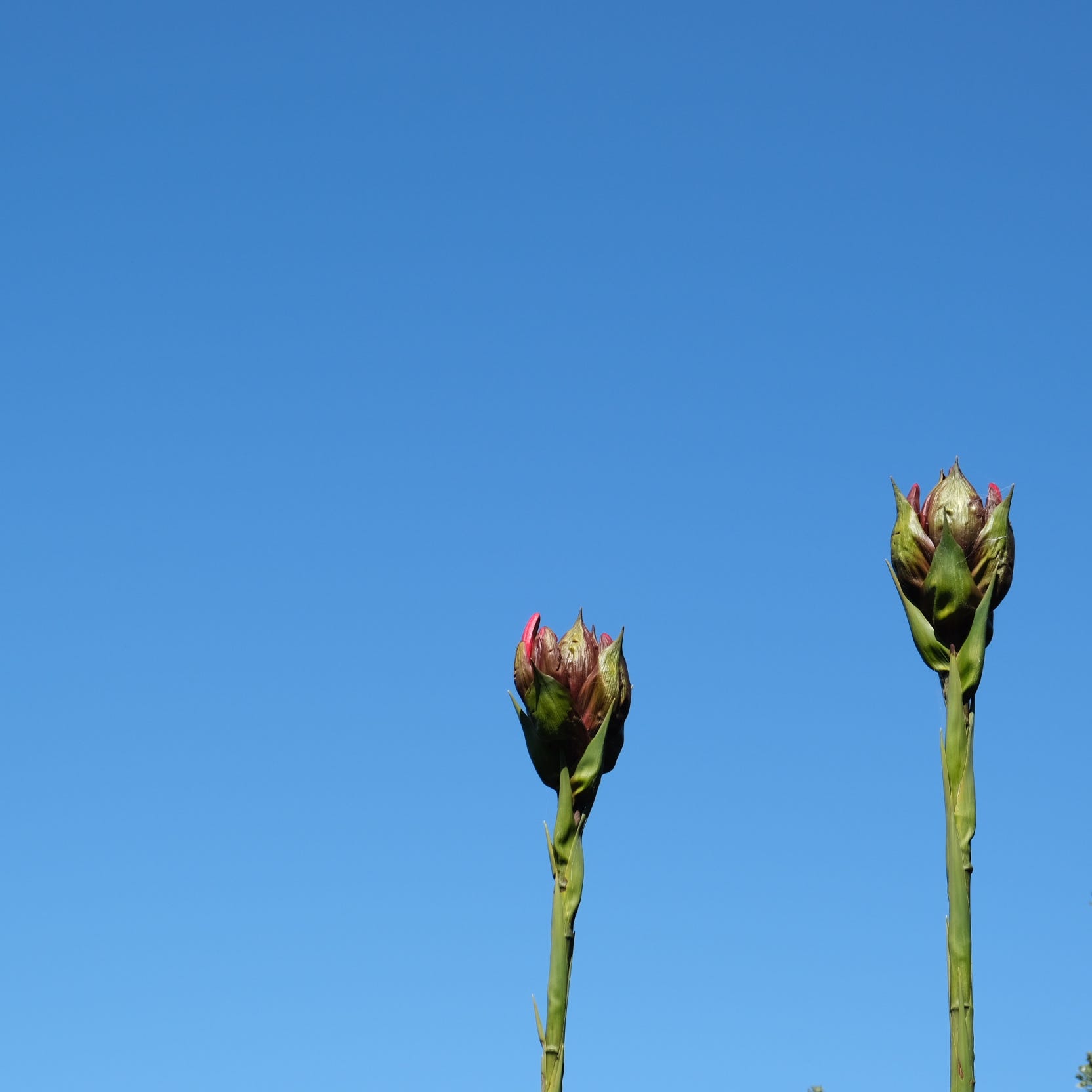
The raucous birds, southerly winds and wild storms will not allow me to forget that I am a visitor here, insignificant and impermenant in this vital land. I'll continue my conversation with the trees, the birds and the ocean. I will endeavour to learn the words of the land, local and scientific. I will name the land itself, Dharawal Country, named by those who cared for it for millennia, and still do. I continue to be awe-struck by palm-sized butterflies, honey-loving birds and blood-red Gayiima that stretch up to the blue skies. Meanwhile, there is the echo of a gentle tide and the push-pull of my shoreline full of feamainn bhoilgíneach, reminding me to return again.
Ngoonungi - the Dharawal Season from Sept-Oct
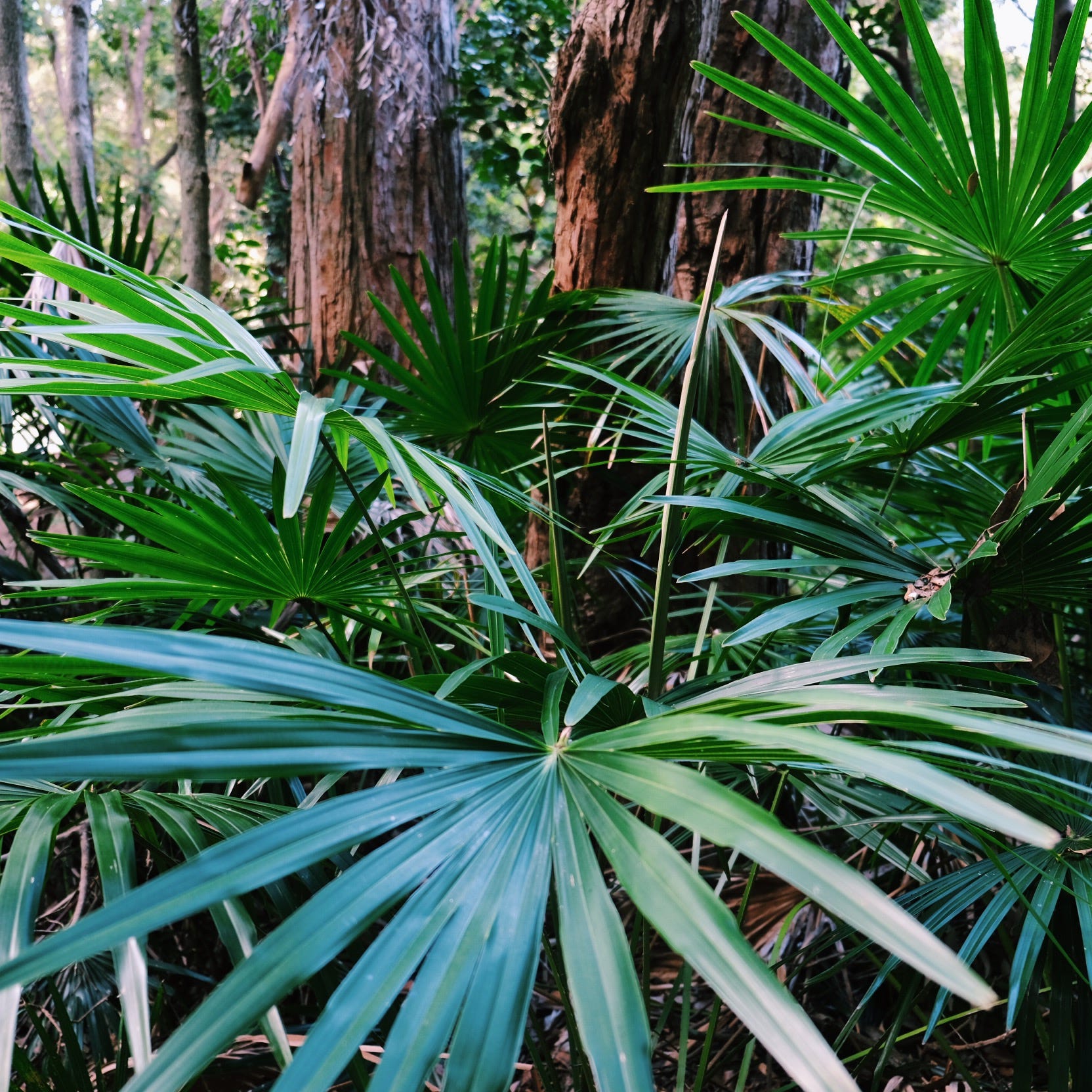
Dharawal - Cabbage Tree Palm (Livistona Australis)
Gayiima - Gymea Lily (Doryanthes Excelsa) in Dharawal language
Feamainn Bhoilgíneach - Bladderwrack (Fucus Vesiculosus,) in Gaeilge
Natures notes is proudly written on and inspired by Dharawal Country.I recognise the Dharawal & Wodi Wodi custodians and ancestors who have an enduring connection to land, water and skies.
Always Was and Always Will be Aboriginal Land.
Anna, your story is fascinating. Thank you for speaking for all of us who long for another place -- either the one we left, or the one we return to. Such a wistful feeling from reading this lovely piece!