

Entangled
whales, humans, and the nets we can't escape

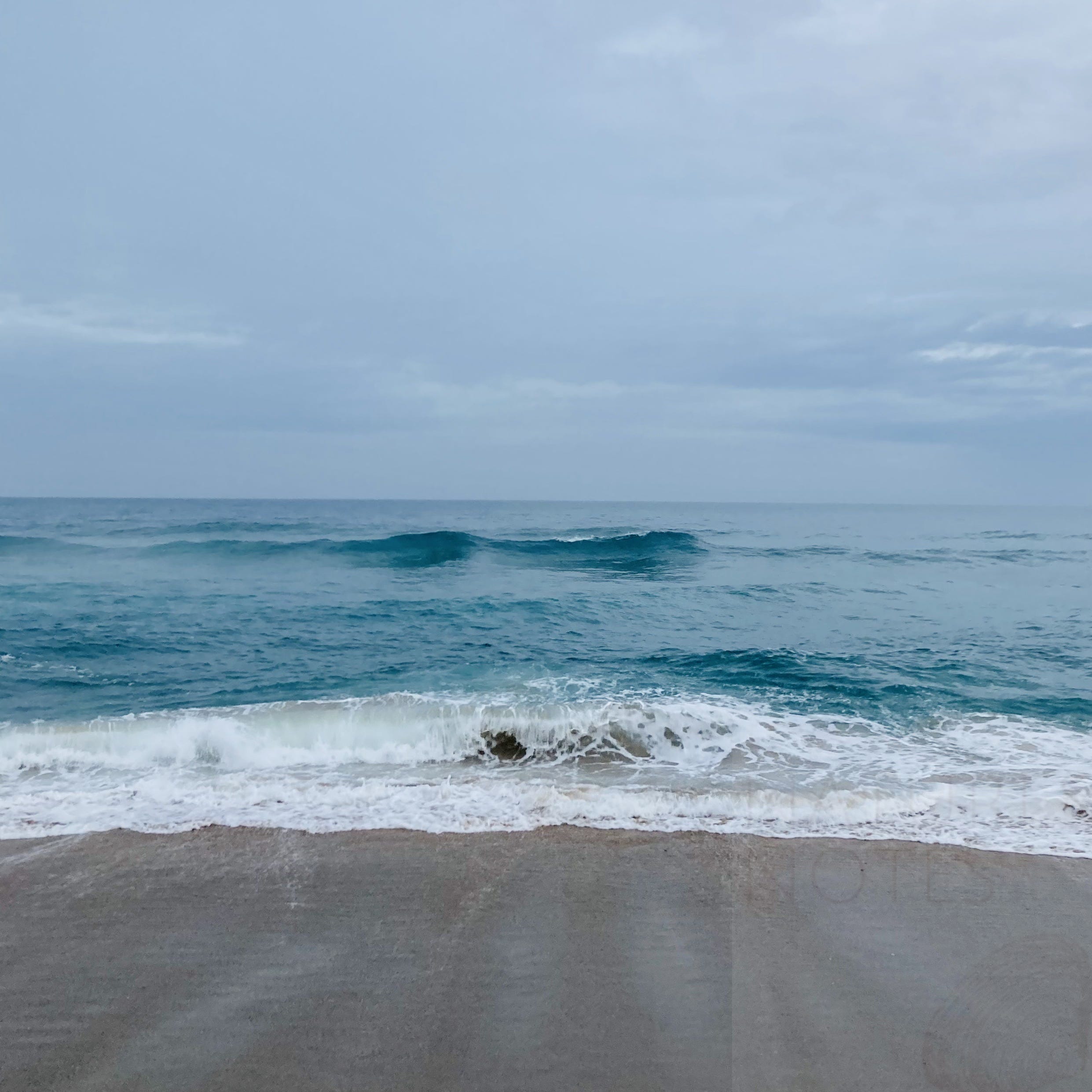
Humpback Whales and their lesser known cousins, Southern Right Whales, have been making their way south down the coast towards cooler waters over the last few weeks. This might be one of the most spectacular shows of mass mammal migrations we humans can witness. For the first few years here in Australia, when I lived closer to the hubbub of the city, I barely noticed, or had the patience to stand and look out for whales, but now it’s one of the reasons I love being here so much. There are hundreds of species on the land, in the seas and in the skies that make these vast migratory journeys, thousands of kilometres over, around and through countries and continents, where our maps and measures don’t exist. There are distances upward of 10,000km and more that are unfathomable to us without the technology of transport. Migration is not unique to animals or humans, even trees migrate in response to climate change.
I read an article in the news recently about the migration of desert lions in Namibia who, through lack of food, have moved from the arid plains of the desert to the coastal shores, swapping their diet of land-based mammals to fur seals. This is the only known example of lions relocating to the coast in order to seek new prey. In the need to preserve themselves and their young, the pride moved from their usual hunting ground to another in order to survive. Two cubs have been born since the move, and the pride of twelve lions are said to be doing well.
It got me thinking, as I scanned the horizon from the beach recently searching for the tell-tale water spout of a humpback in transit. I wondered what it might be like to live somewhere where the spectacle of migration was human, that boats full of people might come ashore, and how the surf lifesavers who patrol our beaches for swimmers in trouble might instead be prepared to assist or save people in or out of boats who have made perilous journeys across the ocean to find a better life.
It doesn’t take much to imagine what this might look like. We see it in the news often, war-ravaged, famine-stricken countries are experiencing mass exoduses if people can leave at all. Australia in particular has always been a destination for economic migration, for asylum from the threat of war or discrimination, but increasingly, climate change is a new threat. Our Pacific neighbours in low-lying regions are experiencing swift and drastic impacts of climate change and consequently, climate migration will increase. Tuvalu and Kiribati are two of the most vulnerable low-lying Pacific nations experiencing significant climate change impacts. Australia has recently come to an agreement with Tuvalu to grant 280 visas per annum to climate refugees.
Meanwhile, back in the ocean, alerts have been issued for coastal dwellers to be on the lookout for a humpback calf entangled in a fishing net travelling south. Only time will tell if an intervention can be staged by trained wildlife officials, or if the entanglement is too severe for the baby to survive. Entanglements from discarded fishing nets and shark nets are not uncommon, and while some interventions are successful, they can be very difficult. The stress on mother and baby can be so severe that rescue crews cannot safely approach to assist. A humpback was disentangled recently, but ongoing monitoring by ORRCA shows severe ongoing impacts on its health, including the physical scars of the embedded netting, but also the overall condition and behaviour of the whale, no doubt a highly traumatic event for such sensitive beings.
It’s almost too awful to comprehend, and yet all of this reminds me how deeply we’re caught in our nets, stories of ‘mass migration’ infiltrating borders, of misinformation spreading faster than truth. The media, once a forum for accountability, now serves the interests of billionaires and lobbyists. And behind it all, the familiar catastrophes of war, famine, and denial, men and markets consuming the world while refusing to see what’s being lost.
It’s no surprise that a creature hunted to near extinction still faces human interference. We saved the whales only when we found something more profitable: petroleum. That same resource now threatens them differently with warming oceans, acidifying seas, and the detritus of industrial fishing driven by fossil-fueled vessels.
How short our memories are, how false our belief is in the ownership of land, of food, indeed of life. We can’t seem to help ourselves. Or at least that’s how I feel sometimes, deflated, overwhelmed and angry. I often say to myself, as Captain Boyle said in Juno and the Paycock, “the whole world is in a terrible state o’ chassis”. And it is. And it would be foolish to deny it. The world has always been in some sort of chaos. With all the intelligence we seemingly have, it certainly seems we can be a bit effing stupid.
I don’t exclude myself from stupidity. I’m no genius. I don’t have the answers to any of the world’s dilemmas. I’m willfully head-in-the-sand at times, perhaps in a self-protective way. I indulge in TV makeover shows in lieu of more serious interventions. It allows a little reprieve from my otherwise quite overactive imaginings of worst-case scenarios. And yet, there is such enormous reprieve from the silliness of humans, in being human, the ability, for example, of this particular human, to burn oneself in the scorching Australian sun three days before an appointment with the skin check doctor. All good, nothing to report, other than a self-diagnosed humiliation. But we have to laugh, and cry, don’t we?
Speaking of sun, it barely showed itself today, just moments between sullen grey clouds. I slapped lashings of suncream on and forced myself outside. At my usual lookout the clouds blended with the ocean, navy greys smudging the horizon to near nonexistence, and as if on demand the sun cut through the clouds, glistening on the glassy ocean. And, just 150 metres offshore moving slowly south, was a pod of dolphins. The swell was high but soft, like rolls of velvet. They passed a group of surfers within an arm’s length and the lifeguards on the beach, and as all of us watched from the shore and cliffside, a tiny calf emerged and jumped into a folding wave alongside its mother.
They moved with such ease, gliding past, everyone in awe. Just last week I’d watched a similar spectacle, but with the addition of a humpback and her calf, alongside what may be the same pod of dolphins, so to see this today felt like the kind of magic you hope for but can’t count on. It’s moments like this that make you pause, in absolute wonder and reverence.
But there was something in this, that sense of the momentary magic, something I’ve felt before watching whales and dolphins. A bittersweetness. We stand there observing them as if watching some large television, viewing them from outside their world. They are so far beyond us. Their absolute beingness, their complete lack of attention on us, creates a sort of wonder, a longing for even a fragment of insight into what it must be like to not be human.
Scientists, writers
face, name, claim Earth’s light, dark truths.
Work, words help our odds.
How I share this lament: "How short our memories are, how false our belief is in the ownership of land, of food, indeed of life."
Thank you for being part of the solution, Anna. We can live differently!!! You are living hope. <3