

Almost Seen
between storms and stillness


The rain poured across thousands of kilometres up and down the coast. It poured, hellbent on finding its kind, spreading to meet waterways and find paths, weaving through rocks, into lakes and dams. It poured onto the tallest of the gum trees, Eucalyptus Grandis, stretching up, up into the clouds as if to beckon the rain across their boughs and down their smooth-barked pale trunks, to meet their flaky rough skirts, slowing the water, distributing the deluge gently.
Under the gums, large-leafed Cabbage Palms caught the rain like forest timpani, rhythmically beating the patter of the rain: faster, harder beats telling us to stay in, slow drips suggesting an end to the downpour, the symphony at rest.
Further south, the leaves of the Brachychiton acerifolius, Flame Tree, buckled under the volume, giving way and drooping down, the water quickly finding the ground, flowing deep into the leaf litter and down into the soil. Soil rich with months of decayed foliage, home to beetles and worms and weevils.
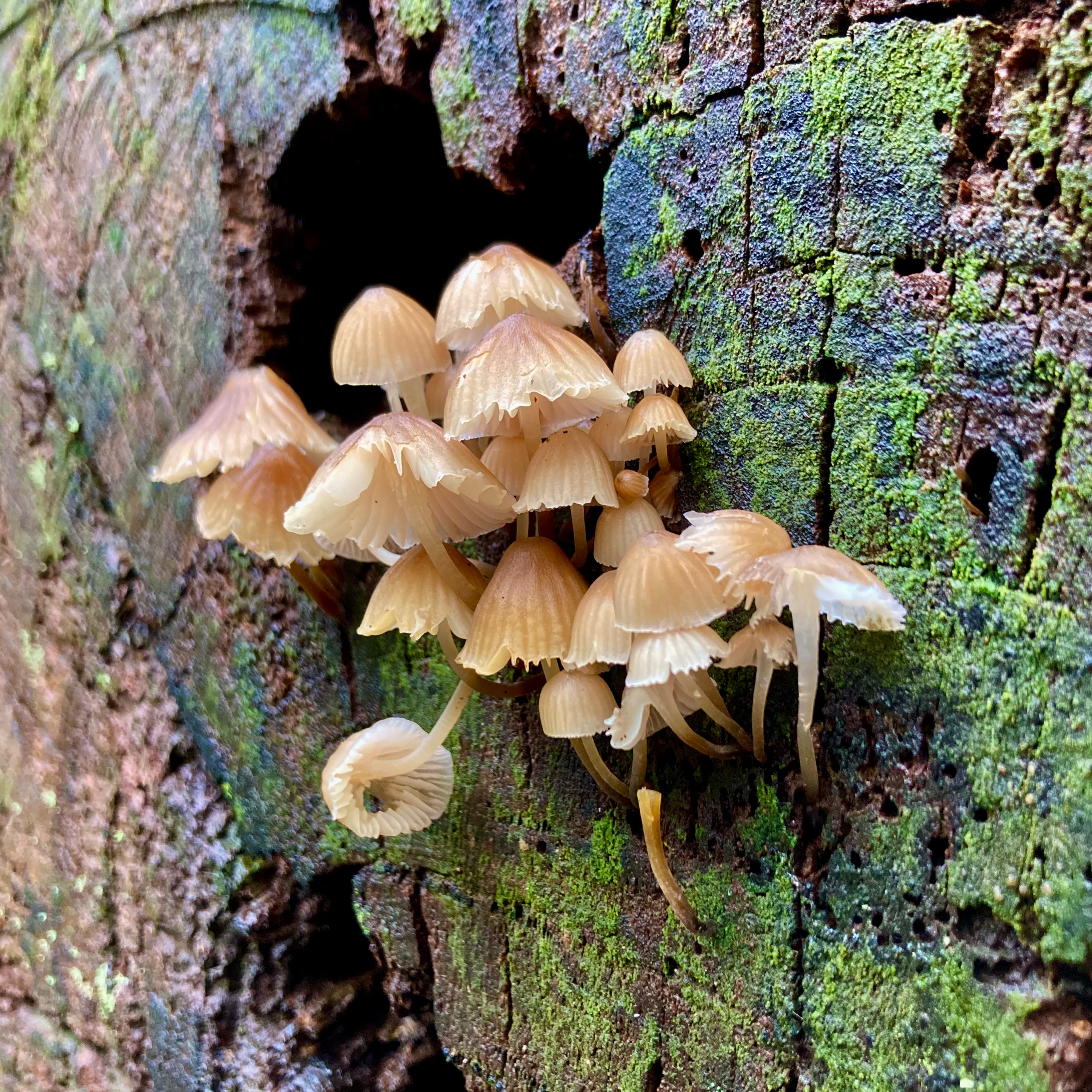
The rich humus awaited the downpours, and beneath it, a network of fungi longed for cooler climes and abundant rains, the perfect opportunity to don their costumes and rise above ground, however fleetingly, to show their beautiful fruiting bodies in magical shapes and forms.
Meanwhile, in the human world, gutters filled and swollen with detritus struggled to deflect the water from buildings. Rivers heaved, levees failed, homes were submerged, again. Weeks later, the clean-up continues in the regions affected by this latest record fall. I wonder how many more records will be broken by the end of this year.
On the Southern coast, we were fortunate to have dodged the worst of it. More storms filled the sky again last week, this time geomagnetic: the kind of storm we like. As the rain receded in the north, excitement grew down south as the potential for a rare glimpse of Aurora Australis spread. I was in my pyjamas in a rare attempt to go to bed early when photos began filling my phone and I realised I might miss this spectacle. I leapt out of bed, afraid to miss the pink and green skies, not content to watch it through another person's phone. I packed my camera and ran down towards the beach, not knowing if I might catch a glimpse. These two wild weather patterns seem to bridge a seasonal shift, much less dramatic but no less beautiful in its quiet unfolding.
The aftermath of the rain here, in contrast to the north, has been spectacular. Intense blues, sun-filled skies, cool comfortable days. Emergence. Plants, animals and fungi seem to be in celebration of the cooler climes and thirst-quenching rains. Everything seems luminously alive. There is a subtlety to this time of the year, unlike the harsh heat, noise and intensity through the summer months, the changes now are gentle, slow and quiet. Here on D'harawal country, where seasons don't fit the European calendar, this is the season of Burrugin (Echidna) shorter, cooler days,not based on dates, rather the activity of the plants and animals. The male Burrugin (echidna) will be searching for mates and the Buringoa, Forest Red Gum (Eucalyptus tereticornis) will begin to flower.
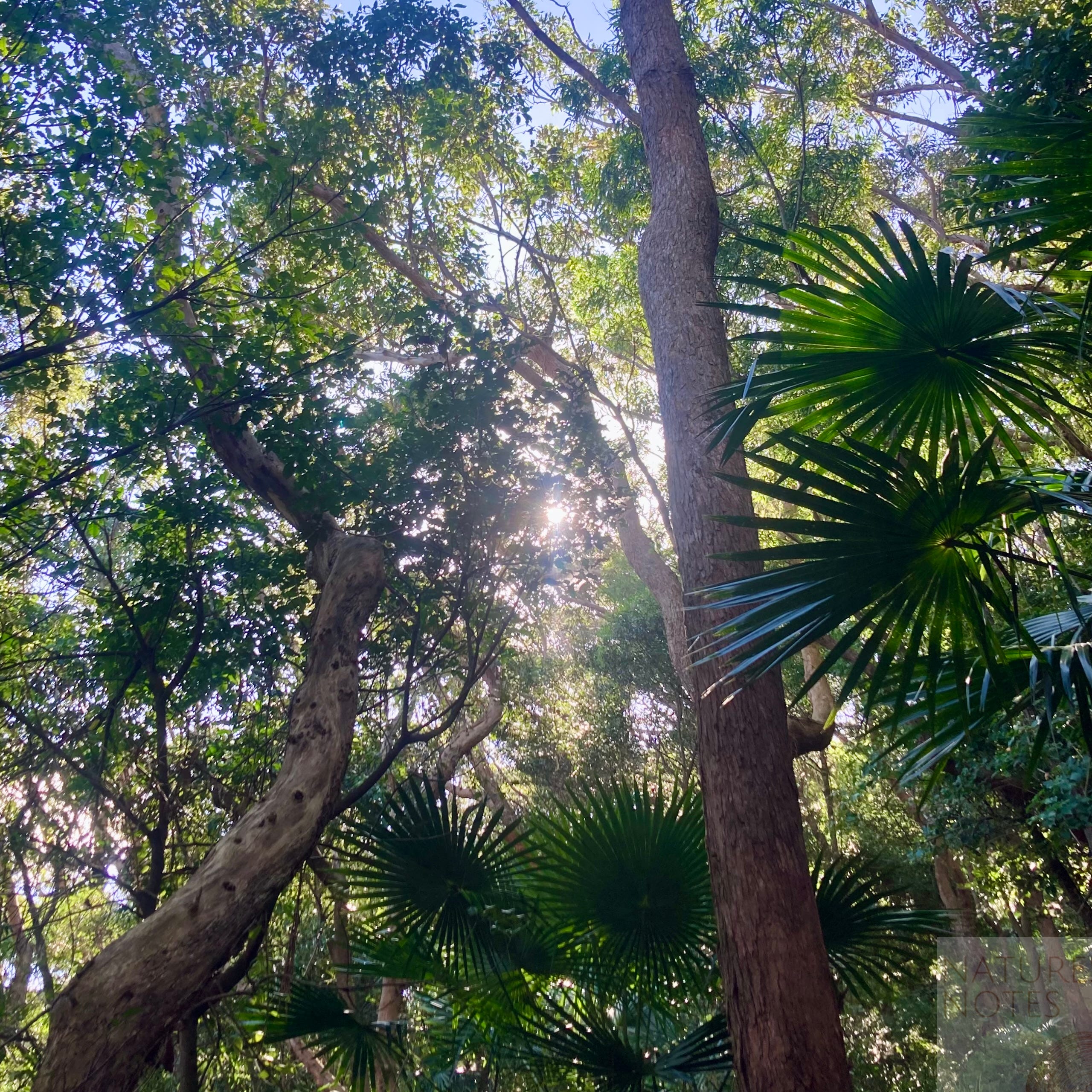
Walks under the canopy, across the soft, soaked undergrowth have felt like stepping into some sort of liminal space. The forest floor, at first glance, appears typical—layer upon layer of spent leaves, twigs, and shrubs. But by slowing down, I suddenly started to see another world, one that requires patience. Among the leaves are an array of fungi pushing upward, their fruiting bodies emerging from the tangled network below the ground, in all their splendour. Discovering new and uniquely coloured fungi is like hunting for Easter eggs, but so much better.
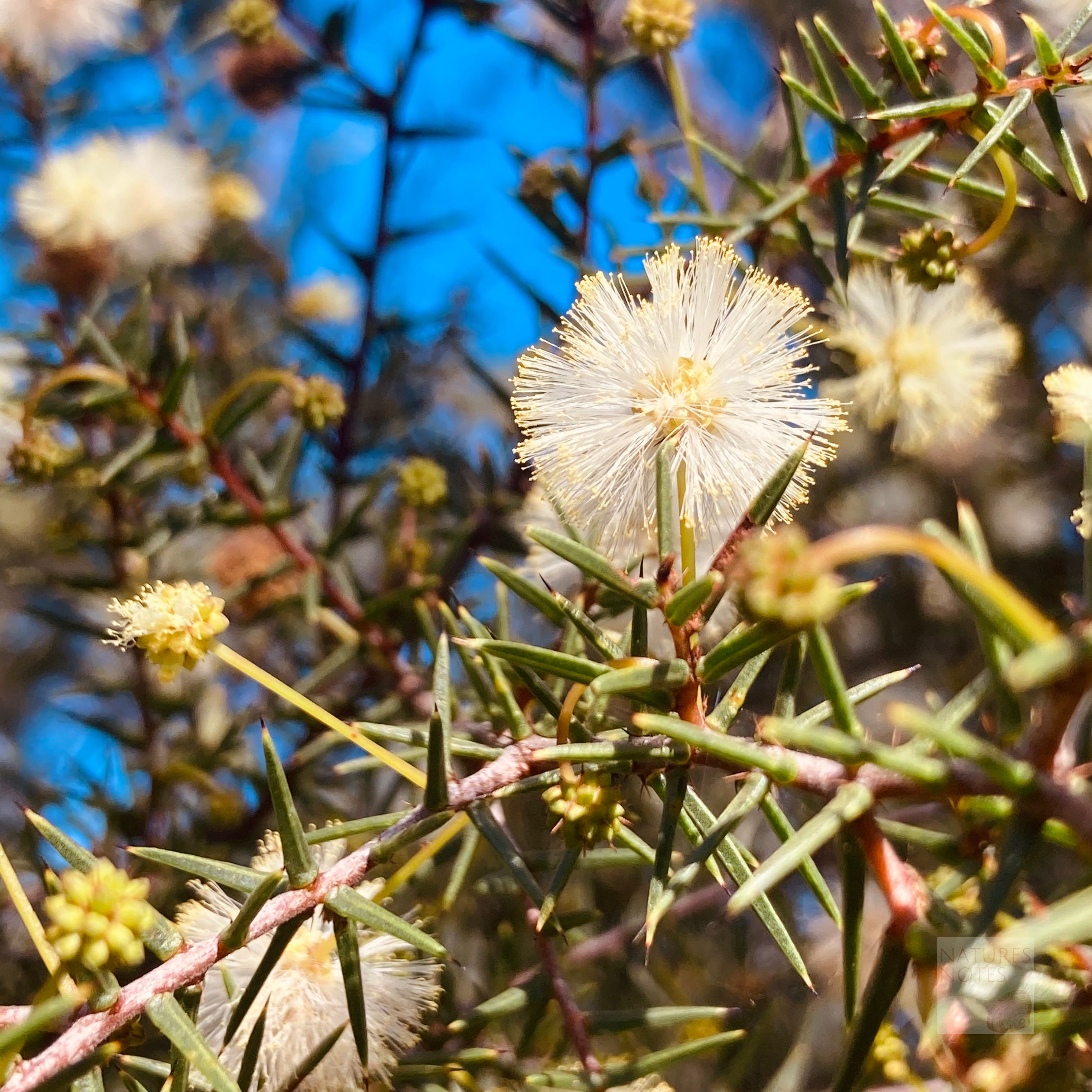
These shifts in season feel almost imperceptible at first, not announced by dramatic temperature drops or obvious markers, but revealed through subtleties that only slowness can unveil. I’ve noticed with delight, Prickly Moses (Acacia ulicifolia) blossoms unfurl from tightly bound buds and the bright fuchsia bells of the Fuchsia Heath (Epacris longiflora). There is a change in morning and evening light and a particular quality of dampness in the air that signalled a turning. It reminds me of those early pandemic days when time stretched, when our walks had no destination beyond discovery, and no timeline beyond what daylight offered us. We noticed everything then, it seemed, because it felt as though we had all the time, but none at all, everything felt precious, and nature was a refuge.
The world spins at its familiar frantic pace again these last few years, and it takes conscious effort to step back into that rhythm of attention. To resist the pull of productivity and purpose that makes us rush, brushing past these tiny moments of splendour. When I do slow down, nature reminds me that it is the patient, kind teacher it has always been, showing me that the most profound changes happen quietly, gradually: not in the wild weather and big shifts necessarily, but in the incremental drip, the slow and steady rhythm of becoming, changing, morphing.
I didn’t see the Aurora Australis. I arrived at the beach out of breath. The sky was crystal clear, the stars spectacular, but I’d missed the light show, and when I flicked on my camera, I realised I’d forgotten the battery anyway. I admit, I was a little disappointed. My inner nature nerd cursed my lack of forward planning, and yet the walk home under the stars was gorgeous. I plodded along the beach, listening to the waves and glancing up at the cliff-top lookout, where throngs of hopeful sky-gazers stood in quiet anticlimax, still wishing for one last flash of colour.
Still, I felt that childlike giddiness of being out late, unexpectedly, in communal anticipation of something extraordinary. As I made my way back to my warm bed along the forest path, I heard birds rustling in their roosts and caught the light in a possum’s eyes as I lit my way with my phone. At the top of the path, I turned off the light and stopped to listen and breathe in the night air. Even in this moment of missing what I’d rushed to see, I was comforted by the stillness, by the quiet certainty of nocturnal life continuing on, seen or unseen.
Wonderful atmosphere, rain, plants, animals, sound of waves and the call of birds, the night time excursion. I feel I've been there with you - beautiful xxx